Scopus Journals: Find the List and Verify Indexing
Learn how to find Scopus-indexed journals in your field and verify genuine indexing using official tools like the Scopus Source List, Scimago, and ISSN checks.

If you have a finished manuscript and are wondering where to submit, one of the most common requirements is: submit to a Scopus-indexed journal. But how do you find Scopus journals in your field and how do you verify that a journal is truly indexed (not just claiming to be)? This practical guide walks you through multiple ways to locate Scopus journals, teaches step-by-step verification.
Why this matters
Many researchers—especially early-career authors and non-native English speakers—need two things when picking a journal:
a good topical fit (the journal actually publishes papers like yours), and
real Scopus indexing (not an empty claim).
Choosing the wrong journal wastes time and can hurt your career. Below are reliable methods you can use right now.
How to find Scopus journals (multiple practical ways)

1) Use the official Scopus Source Title list (best practice)
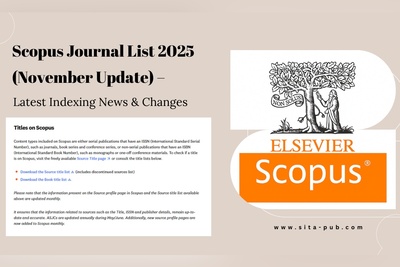
What it is: Elsevier publishes an official “Source Title List” (a downloadable spreadsheet/CSV) that lists all serials indexed in Scopus.
How to use it:
Download the latest Source Title List from Elsevier’s Scopus website.
Filter by subject area and country in the spreadsheet.
Use ISSN, publisher name, and title to shortlist journals that match your scope.
Why use it: It’s the authoritative source — avoid third-party lists that may be outdated.
2) Search Scopus Sources / Scopus Preview online
What it is: Scopus Preview (or the Scopus Sources search) lets you query journal titles, ISSNs and see coverage details.
How to use it:
Go to “Scopus Sources” and enter keywords from your field or a candidate journal title.
Check the subject categories and the years covered.
Why use it: Quick and field-specific. You can confirm whether Scopus currently indexes the title and which subject categories it sits in.
3) Use Scimago / SJR to find journals by subject & quartile
What it is: Scimago Journal & Country Rank (SJR) organizes Scopus-indexed journals by subject and quartile (Q1–Q4).
How to use it:
Select your subject area, then filter by country, quartile, or SJR score.
Use SJR to shortlist journals by reputation and impact metrics.
Why use it: Great for discovering journals of the right level (Q1 vs Q4) in your discipline.
4) Publisher and society journal finders
What it is: Major publishers (Elsevier, Springer, Wiley, Taylor & Francis) and societies provide “journal finder” tools—enter your title, abstract or keywords and get suggestions.
How to use it:
Paste your abstract or keywords into the publisher’s journal finder.
Compare recommended journals to the Scopus Source list.
Why use it: Fast and tailored to your manuscript; but always verify indexing afterwards.
5) Academic / community tools and databases
What it is: Tools such as DOAJ (for OA journals), Ulrichsweb, and university library journal finders.
How to use it:
Use DOAJ for OA journals (then cross-check Scopus indexing).
Use Ulrichsweb to check serial status and publisher credentials.
Why use it: Useful for cross-checking OA status, publisher trustworthiness, and journal history.
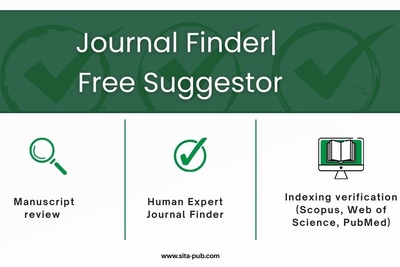
6) SITA Academy’s Journal Suggester (service option)
What it does: SITA Academy analyzes your manuscript (title, abstract, scope, methodology) and recommends Scopus journals tailored to your paper.
What makes it useful: The service matches your manuscript to journals with a high acceptance probability based on fit, past client success, APC constraints, and publication timelines. They report clients achieving over 90% acceptance rates in recommended targets.)
How to use it: Submit your manuscript and requirements; they return a prioritized list of journals with notes on indexing, APCs, and expected timelines.
Related Article
How to verify Scopus indexing (step-by-step)

Use the checklist below to confidently confirm whether a journal is truly indexed in Scopus.
Step 1 — Get the journal’s exact title and ISSN
Find the journal’s full title and ISSN/E-ISSN on the journal’s website or the publisher page. An ISSN is the most reliable identifier.
Step 2 — Search the Scopus Source Title List (or Scopus Sources)
Open the Scopus Source Title List (CSV) or Scopus Sources page.
Search by ISSN first (most reliable), then by title.
Confirm the journal appears and note the coverage years (e.g., 2012–present).
Step 3 — Inspect the Scopus Source record
Click into the Scopus source record (or the Scopus preview). Verify:
Subject categories (does the subject match your field?)
Publisher name (is it the same as the journal website?)
Coverage years and any notes about discontinuation or title changes
Metrics like CiteScore or SJR (optional, but helpful)
Step 4 — Cross-check in Scimago / SJR and DOAJ
If the journal appears in Scimago, it’s indexed and you’ll see quartile and SJR metrics.
For OA journals, confirm DOAJ listing as additional trust signal.
Step 5 — Search Scopus for recent articles from the journal
Use Scopus to search for recent articles by the journal title or ISSN.
Confirm the database shows recent articles indexed—this ensures active indexing.
Step 6 — Check the journal website for transparent info
Legitimate journals will show:
Editorial board (names and affiliations)
Clear peer-review policy
Publication ethics statement (COPE membership is a plus)
ISSN and indexing badges (but don’t rely on badges alone)
Step 7 — Watch for red flags (predatory signs)
Vague or fake editorial board members
Guaranteed acceptance or unrealistic “rapid acceptance for fees” claims
No clear peer-review process or poor website quality
Publisher not known or missing contact/address information
If any red flag appears, verify with Scopus and Scimago before submitting.
Practical tips when shortlisting journals
Match scope first: A perfect topical fit beats a higher-ranked journal that rarely publishes your study type.
Check APCs & waivers: If APCs matter, verify fees and waiver policies before submission.
Estimate timeline: Use journal pages, Publons, or SciRev user reports to approximate review time.
Acceptance rate reality: Many journals don’t publish acceptance rates; SITA’s service gives an evidence-based estimate for your paper.
SITA Academy — Journal selection & full publication assistance
We provide free journal recommendations after a quick review of your manuscript and requirements. Our support includes:
Journal matching (Scopus/WoS/PubMed checks + APC and timeline info)
Native English editing, formatting, and plagiarism checks
Submission management and cover-letter drafting
End-to-end tracking until final publication
Send your manuscript (title + abstract + field + any constraints) to us to receive a tailored list of Scopus journals and a recommended submission strategy. Our combined editorial and journal-matching workflow is designed to save you time and increase your chance of acceptance.
Final word
Finding and verifying Scopus journals is straightforward if you follow authoritative sources (Scopus Source Title List, Scimago, publisher pages) and perform a careful verification checklist (ISSN → Scopus record → recent indexed articles → editorial transparency). If you prefer a hands-off approach or want a data-driven match for your ready manuscript, SITA Academy’s Journal Suggester and publication support can shortlist journals and manage the submission process—helping you submit confidently and efficiently.
Verified Contact Channels
If you have any questions, inquiries, or would like to learn more about our services, please don't hesitate to reach out to us. Our dedicated team is ready to assist you.