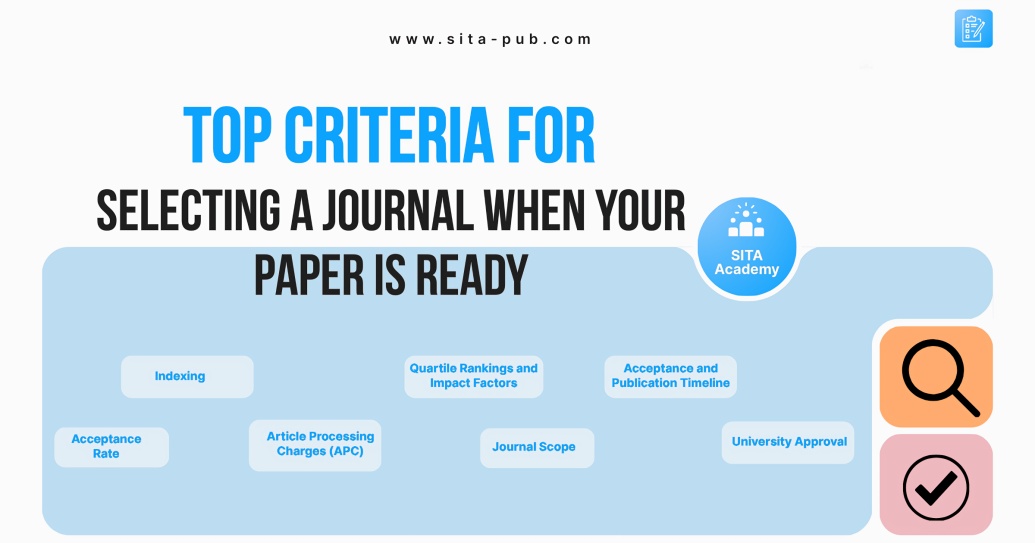
Top Criteria for Selecting a Journal When Your Paper Is Ready
Learn how to choose the right journal for publishing your research paper. This guide covers indexing (Scopus, WoS, PubMed), quartile rankings, impact factors, acceptance rates, APCs, scope matching,.
Completing a research paper is an exciting milestone for any researcher. After months—sometimes years—of designing a study, collecting data, and crafting a strong manuscript, you finally reach the moment when your work is ready to be shared with the academic world. But one critical question remains:
Which journal should you choose for submission?
With thousands of journals available across disciplines, making the right choice can feel overwhelming—especially for early-career researchers. In this article, we break down the top criteria for selecting a journal once your paper is ready, helping you make a strategic and confident decision.
Indexing: Where Do You Want Your Article to Be Indexed?
One of the first—and most important—criteria researchers consider is indexing. Journals indexed in reputable databases ensure your work is discoverable, credible, and recognized by academic institutions worldwide.
Common Indexing Databases
Scopus
One of the largest and most widely recognized databases. Many universities require publication in Scopus-indexed journals for recognition, promotion, or graduation.
Web of Science (WoS)
A more selective database known for stringent quality and impact criteria. WoS includes several indexes:
Whether your keywords align with the journal’s themes
If your research sits at the intersection of two fields, consider multidisciplinary journals.
Submitting to the right scope dramatically increases your chances of acceptance and supports better readership.
Get Approval From Your University or Supervisor
Many universities have strict rules regarding publication:
Only journals indexed in Scopus/WoS/PubMed may be accepted
Some institutions do not accept ESCI or SCIE journals
Certain publishers may be discouraged
Some departments prefer Q1/Q2 publications
Supervisors may have prior experience with specific journals
Before finalizing your choice, confirm with: Your supervisor Department office University publication guidelines
This helps avoid problems after acceptance—especially for thesis submission or academic promotion.
Journal Selection Assistance at SITA Academy
Choosing the right journal can be confusing, time-consuming, and risky—especially if you are not familiar with indexing systems or journal evaluation criteria.
1.
What is the most important factor when choosing a journal for my research paper?
There is no single “most important” factor—rather, the right choice depends on your goals. However, indexing (Scopus, WoS, PubMed), journal scope, and publication timeline are usually the top considerations for most researchers.
2.
Is a higher impact factor always better?
Not always. High–impact factor journals are more competitive and have longer review times. A moderate–impact, field-specific journal may be more suitable and faster if your priority is timely publication.
3.
Do all journals charge publication fees (APC)?
No.
Open Access journals usually charge APCs.
Hybrid journals give you the choice to pay for open access or publish free under subscription.
Traditional subscription journals often have no APC at all.
If budget is tight, look for journals with waivers or free publication options.
4.
How can SITA Academy help me with journal selection?
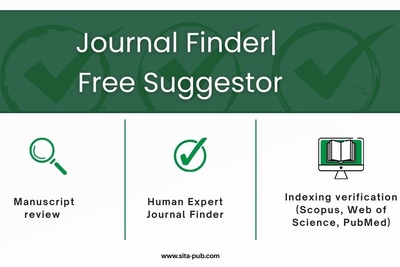
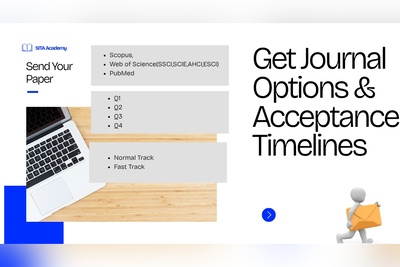
SITA Academy reviews your abstract or full paper and recommends journals based on:
Indexing requirements
Scope alignment
Acceptance rates
Impact factor/quartile
Publication speed
APC budget
You receive a tailored list so you can submit confidently and avoid unnecessary rejections.