Thesis-to-Journal Publication Support for Graduate Researchers
Transform your thesis into published journal articles with professional Thesis-to-Journal Publication Support. We extract publishable papers, translate to academic English, recommend high-acceptance journals, and manage submission until acceptance. Ideal for graduate and PhD researchers seeking Scopus, WoS, or PubMed publications.

A Complete Guide for Graduates Ready to Transform Their Thesis Into Published Research
Completing a graduate thesis is one of the most rewarding milestones in any academic journey. After months—sometimes years—of intensive research, data analysis, writing, and revisions, submitting the final thesis feels like crossing the finish line. Yet for many graduate researchers, the journey does not end there. Whether for PhD graduation requirements, strengthening an academic CV, or building a track record in international research, the next step is often clear: publishing your thesis as journal articles.
However, converting a thesis into a journal-ready manuscript is not as simple as copying and pasting chapters. Journals have strict structures, word limits, academic writing standards, and formatting requirements. Additionally, many theses are written in languages other than English, making professional translation and academic editing essential. This is where Thesis-to-Journal Publication Support comes in—an increasingly valuable service for graduate researchers worldwide.
What Is Thesis-to-Journal Publication Support for Graduate Researchers?
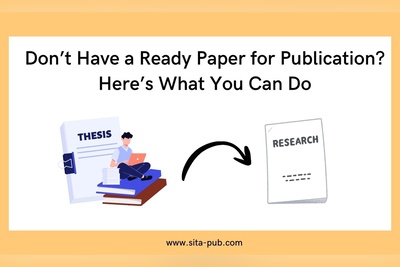
Thesis-to-Journal Publication Support refers to a set of professional academic services designed to help graduate students transform their thesis—written in any language—into publishable English journal articles. These services bridge the gap between a long-form academic document (the thesis) and the concise, structured expectations of peer-reviewed journal papers.
Whether the goal is to publish in Scopus, Web of Science, PubMed, or other reputable journals, these services help ensure that the content meets academic and editorial standards while enhancing clarity, accuracy, and publication potential.

How the Thesis-to-Journal Conversion Process Works
Publishing a thesis is not a direct process. Journals will not accept thesis chapters as submissions because they must follow a specific article structure, length, and formatting. Below is an overview of how the thesis is transformed into publishable papers.
Restructuring: From Thesis Format to Journal Article Format
A thesis typically has a broad, detailed structure, while journal articles must be concise and highly focused. Here is a simplified comparison:
Thesis Structure | Journal Article Structure |
Long introduction with extensive literature review | Short and focused introduction showing research gap |
Multiple chapters covering various subtopics | A single tight narrative focused on one contribution |
Comprehensive methodology chapters | Concise methods section emphasizing reproducibility |
Lengthy results and discussion sections | Streamlined results with targeted discussion |
Overall conclusion and recommendations | Brief conclusion highlighting contributions and implications |
100–300+ pages | 4,000–7,000 words on average |
This transformation requires academic rewriting, reorganizing content, condensing literature, and presenting findings in a journal-appropriate format.
Translation and Academic Editing (If the Thesis Is Not in English)
If the thesis is written in Arabic, Chinese, Spanish, French, Persian, Turkish, or any other non-English language, the next step is professional academic translation. Journal reviewers expect manuscripts to be written in clear, academically precise English. Simply translating word-for-word is insufficient; the text must be rewritten for clarity, academic tone, and coherence.
After translation, the manuscript also undergoes:
Academic editing
Grammar refinement
Style and tone enhancement
Technical terminology verification
Plagiarism checking and reduction (if needed)
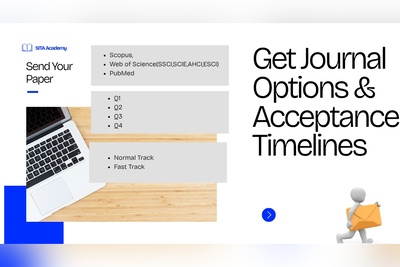
Identifying Suitable Journals
Choosing the right journal is a critical factor in acceptance. Not every journal fits every type of paper. Support specialists analyze:
The paper’s topic and findings
The journal’s scope
Impact factor and indexing (Scopus, WoS, PubMed, etc.)
Acceptance rates
Average review and publication timelines
Open access vs. subscription-based journals
A well-matched journal significantly increases the chances of acceptance and reduces delays.
Formatting and Submission
Journal submission is a detailed process involving:
Formatting the manuscript according to journal guidelines
Preparing cover letters
Ensuring figures, tables, and references follow the journal’s style
Submitting all files through the online submission portal
Responding to editorial queries
Many graduate researchers find this process time-consuming and technically demanding—another reason professional support is extremely helpful.
Waiting for Reviewer Feedback and Revising
After submission, the journal may respond with:
Direct acceptance
Minor revisions
Major revisions
Rejection (with the possibility to resubmit elsewhere)
Support services help prepare revision responses, improve the manuscript, and guide the researcher through the entire process until final acceptance.
What Do Thesis-to-Journal Publication Support Services Include?
These services offer end-to-end support, making publication achievable even for first-time authors. Key features include:
Extracting publishable papers from your thesis
Rewriting and restructuring content into journal format
Translation into scholarly English (if the thesis is in another language)
Professional editing by academic experts
Journal selection with the highest acceptance potential
Formatting according to journal guidelines
Submission and follow-up with the journal
Support during the peer-review and revision process
Guidance until the paper is accepted and published
Even if your thesis is long, outdated, or written in a local language, professional specialists can still turn it into publication-ready English articles.

SITA’s Thesis-to-Journal Publication Support Services
At SITA Academy, we have supported hundreds of graduate students worldwide in converting their thesis findings into published articles in Scopus, Web of Science, PubMed, and other international journals. Our expert team specializes in helping both master’s and PhD graduates navigate the publication journey with confidence.
How Our Service Works
Submit Your Thesis for a Free Review
Send us your thesis, and our expert team will analyze it in detail to determine:
How many publishable papers can be extracted from your thesis
The potential titles for each article
The estimated timeline needed for rewriting, editing, and publication
The steps required to convert the thesis into journal-ready manuscripts
Once the extraction assessment is complete, we provide you with a clear, structured plan showing exactly what can be turned into publishable papers.

Begin the Publication Process: Journal Recommendations & More
After we finalize the extraction and approve the article plan, we move into the publication phase, which includes:
Recommending journals that best match each paper’s topic
Prioritizing journals with high acceptance rates and faster publication timelines
Ensuring the journals align with your academic goals (Scopus, WoS, PubMed, etc.)
Once the journals are selected, we handle:
Full formatting according to each journal’s guidelines
Submission through the journal’s online system
Continuous follow-up and support during peer review until acceptance and publication

Want a Detailed Plan, Journal List, and Quotation?
If you are ready to turn your thesis into international publications, we can help.
Contact SITA Academy through any of the channels below to receive:
A detailed extraction plan
Potential article titles
Suitable journals
Timeline and pricing
Your thesis deserves to be seen, cited, and recognized. Let us help you publish with confidence.
Verified Contact Channels
If you have any questions, inquiries, or would like to learn more about our services, please don't hesitate to reach out to us. Our dedicated team is ready to assist you.