Free Scopus Journals 2026 – Real or Myth? Full Investigation
Learn what free and low-cost Scopus journals are, how to find them in 2026, and the pros and cons of publishing. Discover tips for maximizing your chances of acceptance.
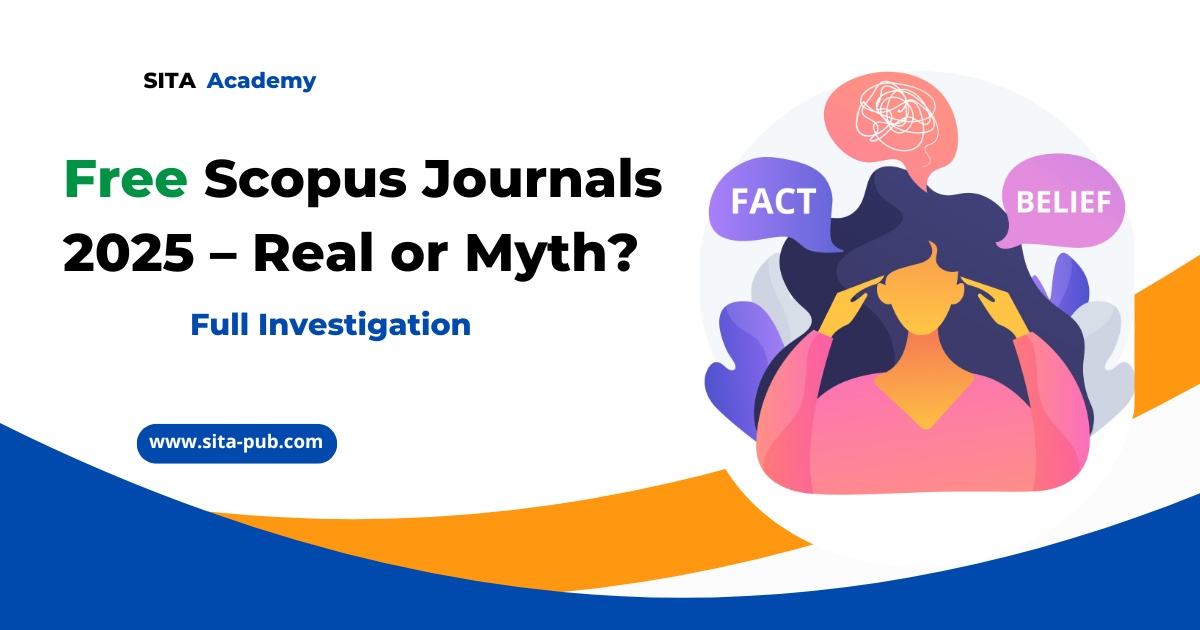
For many researchers — especially those without strong funding — the idea of “free Scopus journals” can be extremely appealing. Who doesn’t want to publish in a Scopus‑indexed journal without paying high fees? But are “free” Scopus journals real — or just a myth? In this article, we explore what “free Scopus journals” really means, whether they truly exist, why some journals are free, the advantages and disadvantages of publishing in them, and practical steps to find such journals in 2026.
What Does “Free Scopus Journals” Mean?
“Free Scopus journals” generally refer to journals that:
Are indexed in Scopus or another recognized citation index.
Do not charge authors any Article Processing Charges (APCs).
May operate under subscription models, institutional funding, or academic society support rather than relying on author fees.
Thus, “free” means no cost to the author, but it does not guarantee other factors like impact factor, speed, or visibility. “Free” also does not necessarily mean “open access”; some free journals may require subscriptions for readers, while others may be open access without fees.


Are They Really Free — And Why Are Some Journals Free?
Some Scopus‑indexed journals truly charge no publication fees. Reasons include:
Funded by universities, academic societies, or government institutions that subsidize publication costs.
Operating under a subscription-based access model, where libraries or institutions cover costs rather than authors.
Relying on volunteer editorial and peer-review work, keeping operational costs low.
Being newer or smaller journals that waive APCs to attract submissions.
While free journals may charge nothing to authors, there can still be optional costs, such as color figures, supplementary data, or language editing if required.
Pros and Cons of Publishing in Free Scopus Journals
Advantages
No financial barrier: Ideal for early-career researchers or those without research funding.
Accessible for many: Makes international publication realistic without grants or institutional support.
Credible options exist: Some free journals maintain rigorous peer review and Scopus indexing standards.
Supports researchers from low-resource regions: Reduces inequalities in academic publishing.
Disadvantages / Risks
Lower visibility or impact: Some free journals are lower-impact, which may reduce recognition.
Slower publication process: Limited resources can result in longer peer review and production timelines.
Minimal editorial or production support: Authors may need to handle formatting or language issues themselves.
Variable peer-review quality: Some free journals may lack consistent or rigorous review standards.
Potential for predatory behavior: Not all free journals are legitimate; verifying indexing and credibility is essential.
How to Find Free Scopus Journals in 2026
Use official Scopus lists: Check Scopus indexing and then verify if the journal charges APCs.
Focus on university or society-funded journals: These often waive publication fees.
Check the journal’s “For Authors” page: Look for statements like “No APC” or “No fees for authors.”
Consider community-driven journals: Society-owned or volunteer-run journals often provide free publication.
Avoid unrealistic offers: Journals promising guaranteed acceptance or ultra-fast review may be predatory.
Check recent publications and editorial boards: Active, transparent journals with credible editors are preferable.
Consider low-APC journals if necessary: Sometimes paying a small fee ensures higher impact or faster publication.
Use trusted academic communities: Some researchers maintain verified lists of free or low-fee Scopus journals.
Free Open Access vs Free Scopus Journals
It’s important to differentiate:
Subscription-based free journals: Authors pay nothing, but articles may be accessible only to subscribers.
Free open access (OA) journals: Authors pay nothing, and the article is freely available online.
Many free Scopus journals are subscription-based; not all are open access. Conversely, some open access journals charge APCs, which are not free to the author. A few “diamond” or “platinum” open access journals remain free for both authors and readers, but they are less common in Scopus.

Are Free Scopus Journals Worth It?
Free Scopus journals are a realistic option when:
You lack funding for APCs.
You are early in your academic career and need publications for graduation or career development.
You are willing to accept potentially lower visibility or slower publication timelines.
Caution is advised if:
You require high impact or maximum visibility.
You need rapid publication.
The journal’s peer-review or editorial quality is questionable.
There is uncertainty about the journal’s legitimacy or indexing status.
Reality Check in 2026
In 2026, free Scopus journals are real but limited. They provide a cost-free pathway to international publication, particularly for researchers from underfunded institutions. However, most free journals are lower-impact (Q3–Q4) or newer publications. High-impact Q1/Q2 free journals are rare.
A practical approach is to:
Target free or low-fee journals when possible.
Be open to paying APCs for higher impact, open access, or faster publication.
Always verify journal credentials before submission.
Conclusion
Free Scopus journals do exist and provide valuable opportunities for researchers without funding. However, they are rare, often lower-impact, and may have slower publication timelines.
Success in free journal publishing requires careful evaluation of journal quality, indexing, peer-review rigor, and publication model. For many early-career or underfunded researchers, free Scopus journals remain a viable gateway to international publication — as long as caution and diligence are exercised.
Free and Low-Cost Scopus Journals with SITA Academy
Are you looking to publish your research in a Scopus-indexed journal without paying high publication fees? At SITA Academy, we specialize in helping researchers, graduate students, and academics find free or low-cost Scopus journals that perfectly match their field of study and research scope.

How We Help You Publish:
Journal Recommendations:
We provide a curated list of verified no-fee and low-cost journals in your research area.
Each recommended journal is carefully selected based on credibility, indexing, and compatibility with your study.
Formatting Services:
Our experts format your manuscript according to the journal’s specific guidelines to maximize acceptance chances.
We handle all technical requirements including references, tables, figures, and structure.
Submission Support:
We assist with the entire submission process, including creating your journal account, and uploading files.
We also provide guidance on cover letters and other submission materials to ensure your manuscript meets all journal requirements.
Why Choose SITA Academy:
Focused on free and low-cost publishing opportunities to reduce financial barriers.
Expert team with years of experience in international journal publishing.
Step-by-step guidance from journal selection to publication acceptance.
Get Started Today:
Send us your field of study and research scope, along with your abstract or summary, and receive a personalized list of journals that do not charge publication fees. Let us help you maximize your chances of acceptance and turn your research into an international publication.
Verified Contact Channels
If you have any questions, inquiries, or would like to learn more about our services, please don't hesitate to reach out to us. Our dedicated team is ready to assist you.