How to Find Journals That Publish Papers Quickly
Learn how to find journals that publish papers quickly. Discover practical strategies to identify relevant journals, check publication speed, and submit your research efficiently without compromising quality.

Publishing research is a critical part of academia, but the process can often be painfully slow. Waiting months—or even over a year—for peer review and publication can delay your career progression, affect funding applications, or slow down the dissemination of your research findings. Fortunately, there are strategies and tools to help you identify journals that can publish your work quickly without compromising on quality. This article provides a step-by-step guide on how to find such journals, with practical examples to help you in your field.
Step : Identify Journals Relevant to Your Field
Before considering speed, it’s essential to find journals that are actually relevant to your research. Publishing in a journal that aligns with your topic increases your chances of acceptance and ensures your work reaches the right audience.
Where to find journals in your field:
Publisher Websites: Most major academic publishers—like Elsevier, Springer, Wiley, Taylor & Francis, and Sage—have searchable databases where you can filter journals by subject area.
Example: On Elsevier, you can search for “cardiology” or “machine learning” and get a list of journals that accept papers in that field.
Journal Databases: Use academic databases to discover journals. Some useful ones include:
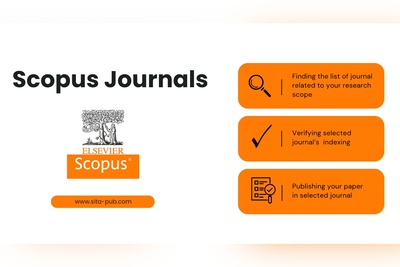
Scopus: Lets you filter by subject area, journal type, and metrics.
Web of Science: Offers curated lists of journals with subject categories and impact factors.
PubMed (for medical research): Provides journal listings in biomedical fields.
Professional Societies: Many professional societies maintain a list of journals affiliated with their field. For example, the American Chemical Society (ACS) publishes several chemistry journals.
Reference Mining: Look at the journals where papers you frequently cite are published. This ensures your target journal is recognized by the same research community.

Step : Check the Journal’s Publication Speed
Once you have a list of relevant journals, the next step is to determine which ones offer rapid publication. There are several ways to assess this:
Look for “Fast-Track” or “Rapid Communication” Options
Many journals offer a fast-track or rapid communication option for urgent or highly significant findings. These are specifically designed to shorten peer review and publication timelines.
How to find these options:
Visit the journal’s website and look under sections like “For Authors” or “Submission Guidelines”.
Look for terms like “fast-track,” “rapid publication,” “online first,” or “early view.”
Some journals indicate expected timelines, e.g., “first decision in 2 weeks” or “online publication within 4 weeks of acceptance.”
Check Average Review and Publication Times
Many journals provide statistics about their review process:
Time to First Decision: How long it typically takes for the editor to send the initial review decision.
Time to Acceptance: The average time from submission to acceptance.
Time to Publication: How quickly accepted papers appear online or in print.
This information is often found in:
Journal websites under author instructions or submission guidelines.
Journal citation reports like Scopus or Web of Science sometimes include publication speed data.
Third-party databases: Websites like JournalGuide or Edanz Journal Selector allow you to filter journals by turnaround time.
Look for Open Access and Online-Only Journals
Open Access journals and online-only journals often publish faster than traditional print journals because they do not rely on print schedules.
Check the journal type on the publisher’s website.
Online-first or continuous publication journals often have faster publication cycles.
Read Author Experiences
Academic forums and social media platforms like ResearchGate, Academia.edu, or Twitter often include discussions about actual journal turnaround times. While official stats are helpful, real author experiences give a practical view of speed and editorial responsiveness.

Step : Evaluate the Journal’s Reputation
Speed is important, but it should not come at the cost of credibility. Avoid predatory journals that promise rapid publication for a fee but do not provide genuine peer review.
How to evaluate:
Check if the journal is indexed in Scopus, Web of Science, or PubMed (for medical research).
Look at impact factor, SJR (SCImago Journal Rank), or CiteScore.
Ensure the journal has a clear editorial board with recognized researchers.
Verify that the publisher is reputable. Avoid unknown publishers that promise “instant publication.”

Step : Practical Example
Let’s go through an example for clarity. Suppose your field is medical research, specifically cardiology.
Find relevant journals:
Search PubMed for recent papers in cardiology and note the journals publishing them.
Check Elsevier or Springer for “Cardiology” journals. Examples may include European Heart Journal, Journal of the American College of Cardiology, or Heart Rhythm.
Check for fast publication:
Visit each journal’s website and look for sections like “Submission Guidelines” or “For Authors.”
Look for phrases such as “Rapid Communication”, “Fast-Track”, or “Online First.”
Note the stated timelines. For example:
European Heart Journal: Time to first decision ≈ 4 weeks, online publication within 2 weeks of acceptance.
Heart Rhythm: Offers “Rapid Communications” with first decision in 2–3 weeks.
Validate journal quality:
Confirm indexing in PubMed, Web of Science, or Scopus.
Check the editorial board and impact factor to ensure the journal is credible.
Decision:
If your paper is urgent and fits the scope of Heart Rhythm, submitting to their Rapid Communications section might be ideal.
Step : Tools and Resources to Speed Up Your Search
Here’s a practical list of resources you can use to find journals and check publication speed:
Journal Finder Tools
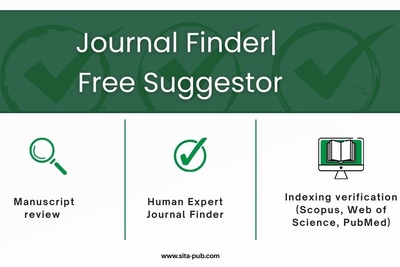
Elsevier Journal Finder – Suggests journals based on your manuscript title and abstract.
Springer Journal Suggester – Helps identify journals by keywords, title, and abstract.
Edanz Journal Selector – Filters by subject area and impact factor.
Databases with Journal Metrics
Scopus – Provides metrics and publication speed statistics for journals.
Web of Science – Includes journal performance indicators.
SCImago Journal & Country Rank (SJR) – Lists journals by subject area and metrics.
Community Feedback
ResearchGate Discussions – Ask colleagues about their experience with journal speed.
Twitter / Academic Twitter – Many academics share experiences of fast publication in certain journals.

Conclusion
Finding journals that publish papers quickly requires a balance between speed and credibility. By:
Identifying journals in your field,
Checking for fast-track or rapid publication options,
Reviewing timelines and author experiences, and
Evaluating journal reputation,
you can strategically select journals that expedite the dissemination of your research.
Whether you are in medicine, engineering, or social sciences, using the tools and strategies outlined above ensures that your research reaches the academic community efficiently without compromising on quality.
How SITA Academy Helps You Choose the Right Journal

Send Your Paper Abstract |

Receive Journal List |

Select Your Journal |

Start the Publication Process |