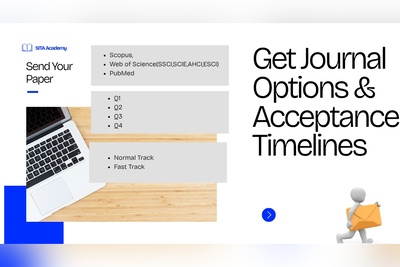
IEEE Xplore Journals with High Acceptance Rates: Fast-Track Publishing
Publish faster in IEEE Xplore journals with higher acceptance rates. Learn how to select the right IEEE journal, avoid rejection, and use strategic publication support for fast-track results.
- Understanding Acceptance Rates in IEEE Xplore Journals
- What Makes Some IEEE Xplore Journals Faster Than Others?
- Common Reasons for Rejection in IEEE Xplore Submissions
- How to Identify IEEE Xplore Journals with Higher Acceptance Probability
- How Our IEEE Journal Selection & Publication Support Works
- Why Strategic Journal Selection Matters More Than Ever
- Start Your IEEE Xplore Publication

Publishing in IEEE Xplore journals is a major goal for researchers in engineering, technology, computer science, and applied sciences. IEEE journals are globally recognized, widely indexed in Scopus and Web of Science, and often required for academic promotion, graduation, and institutional evaluation. However, many researchers associate IEEE publishing with low acceptance rates and long review timelines. While this perception is partly true for flagship titles, it does not reflect the full publishing landscape within IEEE Xplore.
This article explains how fast-track publishing in IEEE Xplore journals is possible when researchers understand acceptance rates, journal categories, editorial workflows, and—most importantly—strategic journal selection.
Understanding Acceptance Rates in IEEE Xplore Journals
Acceptance rates in IEEE journals vary significantly depending on the journal type, scope, and maturity. Highly prestigious IEEE Transactions often have acceptance rates below 15–20%, making them extremely competitive. However, IEEE Xplore also includes emerging journals, interdisciplinary titles, application-focused journals, and open-access venues with broader scopes and higher acceptance potential.
A “high acceptance rate” in IEEE publishing does not mean low quality. In many cases, it reflects:
A clearly defined and practical scope
A focus on applied or interdisciplinary research
Efficient editorial screening processes
Alignment with current research trends and industry needs
Researchers who submit strong but practically oriented studies often face rejection simply because they target overly competitive or misaligned IEEE journals.
What Makes Some IEEE Xplore Journals Faster Than Others?
Not all IEEE journals follow the same editorial workflow. Publication speed is influenced by several factors:
Editorial Workflow Efficiency
Some IEEE journals operate continuous publication models and maintain active reviewer pools, enabling faster decision-making.
Scope Specialization
Journals with well-defined niches (e.g., applied AI, smart systems, communication technologies) tend to process manuscripts faster because submissions are easier to evaluate against specific criteria.
Reviewer Availability
Journals with larger and more diverse editorial boards often secure reviewers more quickly, reducing delays.
Open Access and Emerging Titles
Newer IEEE journals and open-access platforms often aim to attract submissions and build citation records, which can result in smoother and faster editorial handling.
Understanding these differences is essential for identifying IEEE Xplore journals with realistic acceptance prospects and efficient timelines.
Common Reasons for Rejection in IEEE Xplore Submissions

Many IEEE rejections are not due to poor research quality, but avoidable strategic errors:
Scope Mismatch
Submitting to a journal that does not fully align with the paper’s technical focus or application area is a leading cause of desk rejection.
Template and Formatting Errors
IEEE journals strictly enforce formatting rules. Non-compliance can result in immediate rejection before peer review.
Weak Positioning of Contribution
Even technically sound research may be rejected if the novelty, contribution, or application relevance is not clearly articulated.
Targeting Overly Competitive Journals
Many researchers aim for top-tier IEEE journals without considering acceptance probability or timeline constraints.
These issues highlight the importance of informed journal selection before submission.
How to Identify IEEE Xplore Journals with Higher Acceptance Probability
Successful fast-track publishing in IEEE Xplore depends on selecting the right type of journal—not just any IEEE journal.
Choose the Appropriate Journal Category
IEEE Xplore includes various publication types, such as Transactions, Journals, Letters, and interdisciplinary titles. Some categories are more selective than others.
Align Methodology and Application
Applied research, case studies, and implementation-focused work often perform better in journals emphasizing real-world impact.
Consider Indexing and Evaluation Requirements
Many IEEE journals are indexed in Scopus, Web of Science, and ESCI. Selecting a journal that meets institutional indexing requirements without unnecessary competition is a smart strategy.
Evaluate Competition Level
High citation thresholds and narrow theoretical focus increase rejection probability. Balanced journals offer better acceptance prospects while maintaining IEEE credibility.
Fast-Track Publishing Strategies for IEEE Xplore Journals
Fast-track publishing is not about shortcuts—it is about preparation and alignment.
Select journals with efficient editorial histories
Ensure the manuscript is submission-ready before uploading
Match technical depth to journal expectations
Avoid simultaneous submissions or rushed targeting
Researchers who plan strategically reduce revision cycles and avoid unnecessary resubmissions.
How Our IEEE Journal Selection & Publication Support Works
Our service is designed to eliminate trial-and-error publishing.
Manuscript or Abstract Review
We assess your research focus, methodology, and technical contribution.
Targeted Journal Identification
We identify IEEE Xplore journals that align with:
Your research scope
Indexing requirements (Scopus, WoS, ESCI)
Acceptance probability and editorial efficiency
Submission Planning
We ensure full compliance with IEEE formatting and submission requirements, reducing the risk of desk rejection.
This structured approach significantly improves outcomes compared to independent submissions based solely on impact factor or journal reputation.

Why Strategic Journal Selection Matters More Than Ever
IEEE publishing is competitive, but it is not random. Journals reject most papers not because they are weak, but because they are submitted to the wrong venue. Researchers who understand journal positioning, editorial expectations, and acceptance dynamics consistently achieve better results.
Fast-track publishing does not compromise quality—it optimizes strategy.
Start Your IEEE Xplore Publication
If you are preparing to publish in an IEEE Xplore journal and want to:
Avoid unnecessary rejections
Target journals with realistic acceptance rates
Reduce review and decision time
You may submit your abstract or full paper through our contact channels. We will review it and provide a tailored list of suitable IEEE Xplore journals for your approval.
The publication process begins only after you confirm your preferred journal, ensuring transparency, control, and confidence at every stage.

Verified Contact Channels
If you have any questions, inquiries, or would like to learn more about our services, please don't hesitate to reach out to us. Our dedicated team is ready to assist you.