SCIE vs SCI: Are They the Same or Different?
Learn the difference between SCI and SCIE in Web of Science indexing. Understand their meanings, scope, similarities, and differences to choose the right index for your research publication.
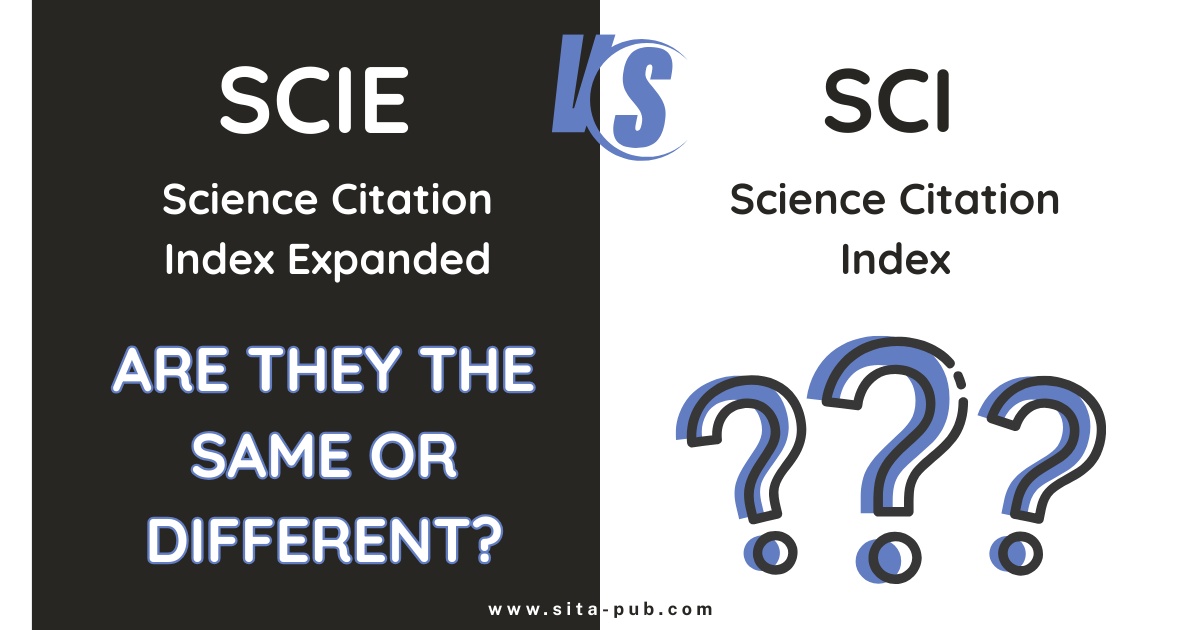
For researchers aiming to publish in internationally recognized journals, understanding journal indexing systems is essential. Among the most frequently mentioned indexes in academic publishing are SCI and SCIE, both of which are part of the Web of Science (WoS) platform. However, many authors remain confused about whether SCI and SCIE are the same, how they differ, and which one is more suitable for their research.
This article provides a clear and practical explanation of SCI vs SCIE, starting with their role within Web of Science, followed by their full meanings, scope, subject coverage, and a detailed comparison of their similarities and differences.
SCI and SCIE Within Web of Science Indexing
The Web of Science is a globally recognized citation database maintained by Clarivate. It includes several core indexes that cover different disciplines and levels of journal impact. Among these core indexes, Science Citation Index (SCI) and Science Citation Index Expanded (SCIE) are two of the most important for researchers in science, technology, medicine, and engineering.
Both SCI and SCIE journals are peer-reviewed, internationally recognized, and widely accepted by universities, funding agencies, and academic institutions. However, they are not identical, and understanding their distinction can help researchers make more informed publication decisions.
SCI Full Form and Meaning in Academic Publishing
What Is SCI?
SCI stands for Science Citation Index. It is one of the original citation indexes created to track high-impact scientific research and scholarly influence through citation analysis.
SCI represents a select group of highly influential journals that demonstrate exceptional academic quality, strong citation performance, and long-standing editorial stability.
Fields Covered by SCI
SCI journals primarily cover core scientific and technical disciplines, including:
Physics
Chemistry
Biology
Medicine
Engineering
Materials Science
Environmental Sciences
These journals typically publish theoretical, experimental, and high-impact research that contributes significantly to scientific advancement.
Key Characteristics of SCI Journals
Highly selective journal inclusion
Strong citation performance
Established publishing history
High editorial and peer-review standards
Lower acceptance rates compared to other indexes
Because of these characteristics, SCI journals are often viewed as elite journals within scientific publishing.
SCIE Full Form and Meaning in Academic Publishing
What Is SCIE?
SCIE stands for Science Citation Index Expanded. As the name suggests, it is an expanded version of the SCI index and includes a much larger collection of scientific journals.
SCIE was created to broaden the coverage of scientific research across more disciplines, regions, and emerging research areas, while still maintaining rigorous peer-review and quality standards.
Fields Covered by SCIE
SCIE journals cover all major scientific disciplines, including those found in SCI, as well as:
Applied sciences
Interdisciplinary research
Emerging and regional scientific fields
Clinical and applied medical research
Engineering and technology applications
This expanded scope allows SCIE to represent a wider range of scientific contributions.
Key Characteristics of SCIE Journals
Larger number of indexed journals
Broader subject and regional coverage
Varying citation levels across journals
Rigorous peer-review standards
More diverse acceptance rates
SCIE journals are widely recognized and accepted for academic evaluation, promotions, graduation requirements, and funding assessments.
SCI vs SCIE: Differences and Similarities
While SCI and SCIE share many core characteristics, they differ in scope, size, and selectivity. The table below summarizes their key similarities and differences.
Comparative Table: SCI vs SCIE
Aspect | SCI | SCIE |
Full Form | Science Citation Index | Science Citation Index Expanded |
Parent Database | Web of Science (Clarivate) | Web of Science (Clarivate) |
Scope | Core, highly selective journals | Broader and expanded journal coverage |
Number of Journals | Smaller, elite group | Larger and more inclusive |
Subject Coverage | Core scientific disciplines | Core + applied + interdisciplinary sciences |
Acceptance Rate | Generally very low | Varies by journal |
Citation Threshold | Very high | High but more variable |
Peer Review | Rigorous | Rigorous |
Academic Recognition | Very high | Very high |
Suitability | High-impact, advanced research | Broad scientific research and applications |
Are SCI and SCIE Equally Recognized?
From an academic and institutional perspective, both SCI and SCIE journals are part of the Web of Science Core Collection and are generally recognized as high-quality international journals.
However, some institutions or evaluation committees may place greater emphasis on SCI journals due to their higher citation concentration and selectivity. That said, SCIE journals are fully legitimate and widely accepted for:
PhD graduation requirements
Academic promotions
Research funding applications
Institutional performance evaluations
The key factor is not only whether a journal is SCI or SCIE, but whether it aligns with the research quality, scope, and academic goals of the author.

Which Should Researchers Target: SCI or SCIE?
Choosing between SCI and SCIE should be a strategic decision based on several factors:
Research novelty and depth
Target audience and discipline
Institutional requirements
Time constraints and publication deadlines
Acceptance probability
Highly theoretical and groundbreaking studies may be more suitable for SCI journals, while applied research, interdisciplinary work, or thesis-based articles often align better with SCIE journals.
Importantly, submitting to the wrong index or journal scope can lead to unnecessary rejection, regardless of research quality.
Final Thoughts
SCI and SCIE are closely related but not identical. Both are prestigious components of the Web of Science Core Collection, yet they differ in scale, selectivity, and scope.
Understanding these differences helps researchers:
Set realistic publication goals
Choose appropriate journals
Improve acceptance chances
Avoid delays caused by poor journal selection
Rather than focusing solely on labels, researchers should prioritize journal scope alignment, manuscript readiness, and institutional requirements. A well-matched SCIE journal can be just as valuable—and sometimes more practical—than aiming exclusively for SCI.
A clear understanding of SCI vs SCIE is a critical step toward successful and strategic academic publishing.
Get Expert Guidance on Journal Selection
Not sure which journal to submit to? SITA Academy helps you find journals with high acceptance rates and guides you through the entire publication process.
Verified Contact Channels
If you have any questions, inquiries, or would like to learn more about our services, please don't hesitate to reach out to us. Our dedicated team is ready to assist you.