Can I publish in international journals if my thesis is not in English?
Can you publish a non-English thesis in international journals? Learn how to convert your thesis into a journal article, translate it into English, meet Scopus and Web of Science requirements.
Introduction
Many graduate students and researchers complete their Master’s or PhD theses in languages other than English, such as Arabic, French, Spanish, or other local and regional languages. When it comes time to publish their research in international journals indexed in Scopus or Web of Science, a common and very important question arises:
Can I publish in international journals if my thesis is not in English?
The short answer is yes, but the process is not automatic and requires careful preparation. International journals indexed in Scopus and Web of Science primarily publish content in English, and they follow strict standards related to language quality, article structure, and academic presentation.
Publishing a non-English thesis internationally involves converting the thesis into a journal article format, translating it into English, and professionally editing it to meet international academic expectations. This article explains the process step by step, in practical terms, so you can understand what journals expect and how to prepare your work correctly.
How to Prepare a Non-English Thesis for International Publication

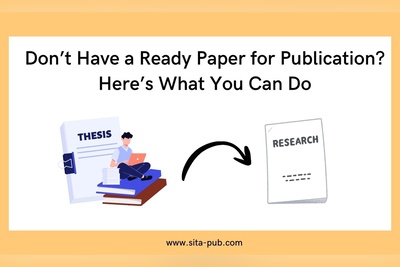
The first thing to understand is that a thesis and a journal article are not the same. Even if your thesis contains strong and original research, it cannot be submitted directly to an international journal.
Before language translation even begins, your work must be restructured into a journal article format.
This preparation typically involves:
Selecting publishable sections from the thesis
Condensing the content to meet journal word limits
Focusing on one clear research objective per article
Reorganizing sections to follow standard article structure (Introduction, Methods, Results, Discussion)
Removing unnecessary background, repetition, and thesis-specific content
Many theses can produce more than one journal article, depending on their scope and depth. Identifying how many articles can be extracted and what their titles should be is a critical early step.
Only after the content is structured as a journal-ready article should translation into English begin.
Translating Academic Research into English: What Journals Expect

Translation is one of the most misunderstood steps in international publishing. Journals do not simply expect a literal translation from another language into English. They expect clear, accurate, discipline-specific academic English.
What journals expect from a translated article includes:
Correct technical and scientific terminology
Clear academic tone and formal writing style
Logical flow and coherence between sections
Accurate representation of methods, results, and conclusions
No signs of direct or mechanical translation
Poor translation is one of the most common reasons non-native authors face rejection. Even if the research is strong, unclear or awkward English can make it difficult for editors and reviewers to evaluate the paper fairly.
This is why translation should ideally be done by professionals who understand both the subject area and academic publishing standards, not just general language translation.
Why Professional Academic Editing Is Required After Translation

Translation alone is not sufficient for submission to international journals.
After translation, professional academic editing is required to ensure that the manuscript meets the expectations of English-language journals. Editors refine the language, improve clarity, correct grammar, and adjust sentence structure so the paper reads like it was written by a proficient academic English author.
Key benefits of professional academic editing include:
Improved clarity and readability
Stronger academic tone
Elimination of grammatical and stylistic errors
Better alignment with journal expectations
Reduced risk of desk rejection
Native English Editing Certificates
Many Scopus and Web of Science journals explicitly state that manuscripts written by non-native English authors must undergo native English editing. In some cases, journals may request an English editing certificate during submission or after peer review.
A native English editing certificate confirms that:
The manuscript has been reviewed by a qualified English-language editor
Language quality meets international academic standards
The paper is suitable for peer review from a language perspective
Providing such a certificate can increase reviewer confidence and prevent language-related rejection or major revision requests.
Final Checklist Before Submitting a Translated Article

Before submitting a translated article to an international journal, researchers should carefully review the following checklist:
The thesis content has been converted into a proper journal article format
The article length complies with the target journal’s requirements
The manuscript has been professionally translated into academic English
Native-level academic editing has been completed
An English editing certificate is available if required
Plagiarism and similarity checks have been conducted
References and citations follow the journal’s style
Figures, tables, and supplementary files meet journal guidelines
The article matches the scope and aims of the selected journal
Skipping any of these steps can significantly reduce acceptance chances, even for high-quality research.
Professional Support for Translating Theses and Publishing Internationally

Navigating translation, editing, restructuring, and journal selection can be overwhelming—especially for first-time authors or researchers working under time pressure.
This is where professional publication support becomes highly valuable.
How SITA Academy Can Help
SITA Academy specializes in helping researchers publish non-English research in international journals. We support researchers at every critical stage of the process.
Our services include:
Analyzing non-English theses for converting into journal articles
Identifying how many articles can be extracted and proposing article titles
Converting thesis content into journal article format
Professional academic translation into English
Native English editing and certification
Plagiarism checking and ethical compliance
Journal recommendation based on scope and acceptance potential
Full submission and publication support if requested
Start with a Free Analysis

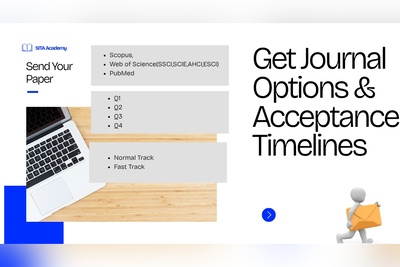
To begin, you only need to send your paper for a free initial analysis.
Our experts will review your work and inform you:
How many journal articles can be extracted
Suggested article titles
The readiness of your research for international publication
Once you confirm, we proceed with the extraction, translation, and preparation process—ensuring your research meets international publishing standards.
Final Thoughts
Publishing a thesis written in a non-English language in international journals is absolutely possible—but it requires structured preparation, professional translation, and high-quality academic editing.
When done correctly, language should never be a barrier to sharing valuable research with the global academic community. With the right support, non-English theses can become strong, publication-ready English articles suitable for Scopus and Web of Science journals.
Verified Contact Channels
If you have any questions, inquiries, or would like to learn more about our services, please don't hesitate to reach out to us. Our dedicated team is ready to assist you.