5 Steps to Publishing a Thesis-Based Research Paper
Learn the step-by-step process of publishing a thesis-based research paper, from journal selection to peer review and final acceptance.

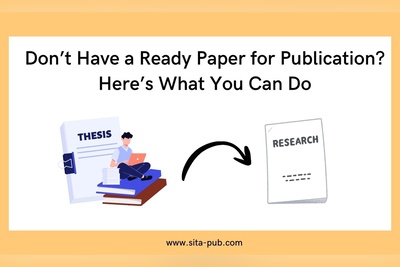
A thesis represents extensive academic work, but journal articles require focus, precision, and adherence to strict publication standards. Publishing a thesis-based research paper involves more than shortening the document; it requires identifying the most valuable contribution of the thesis and presenting it in a concise, journal-ready format. The following five steps provide a practical and structured approach to successfully converting a thesis into a publishable research paper.
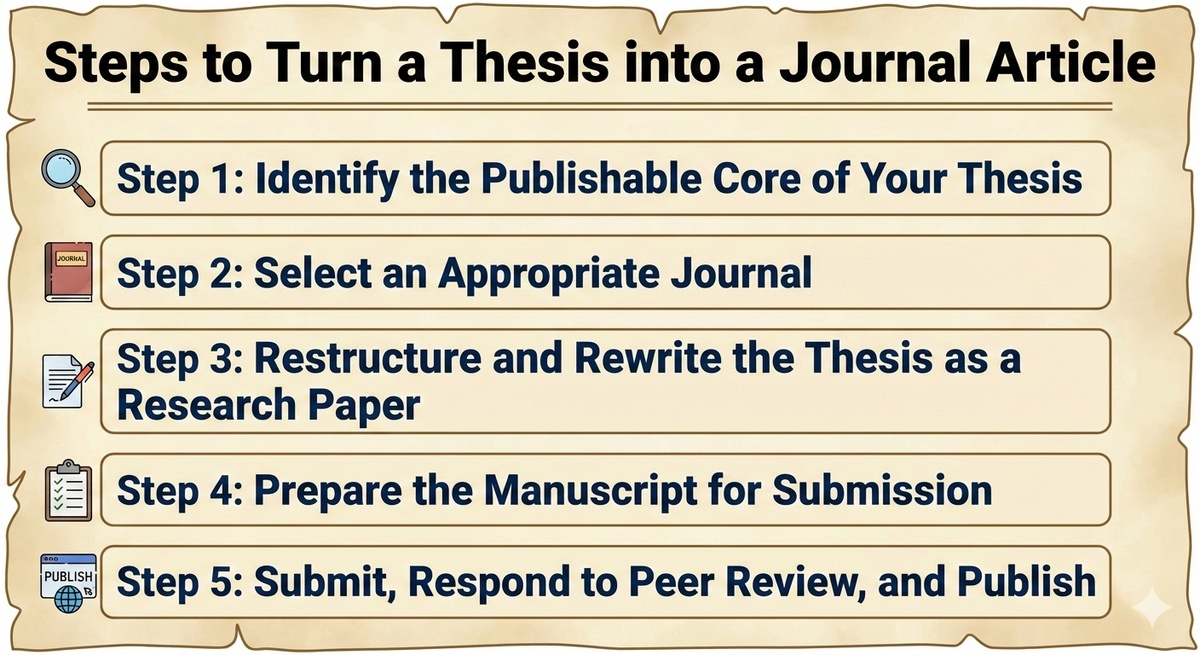
The first step is to determine which part of your thesis is suitable for publication. A thesis often contains multiple research questions, extensive literature reviews, and detailed methodology sections that exceed journal requirements. Journals typically expect a single, clearly defined contribution.
Begin by identifying:
The strongest research question or hypothesis
The most significant findings
The section of the thesis that offers originality or new knowledge
Ask yourself what aspect of your thesis would interest a broader academic audience. In many cases, one thesis can produce multiple articles, but each article should focus on one central argument or result.
It is also advisable to consult your supervisor or advisor at this stage. Their experience can help determine whether your research is ready for publication and which part has the highest potential impact.
Choosing the right journal is critical for successful publication. A common mistake is submitting a paper to a journal that does not match the topic, methodology, or scope of the research.
To select an appropriate journal:
Review journals in your field that publish similar studies
Examine the journal’s aims, scope, and recent publications
Consider the journal’s audience, impact factor, and review timeline
Pay close attention to the journal’s author guidelines, including word limits, formatting style, and referencing system. Journals differ significantly in their expectations, and aligning your paper early with the target journal saves time later.
Avoid predatory journals by ensuring the journal is indexed in recognized databases and follows transparent peer-review practices.
A thesis and a journal article serve different purposes. A thesis demonstrates comprehensive knowledge, while a research paper communicates a specific finding efficiently.
Key restructuring actions include:
Reducing the literature review to only the most relevant sources
Condensing the methodology while maintaining clarity and rigor
Presenting results concisely, using tables or figures where appropriate
Strengthening the discussion to emphasize contribution and implications
Rewrite sections rather than copying them directly. Journals expect a focused narrative, active academic voice, and logical flow. Ensure that the introduction clearly states the research problem and contribution, and that the conclusion highlights why the findings matter.
Before submission, the manuscript must meet all technical and ethical requirements. This step involves careful editing and compliance with journal standards.
Key tasks include:
Formatting the manuscript according to journal guidelines
Ensuring citations and references are accurate and consistent
Checking language clarity, grammar, and academic tone
Confirming ethical approvals and authorship declarations
Plagiarism checks are essential, even when publishing from your own thesis. Some journals require explicit disclosure that the article is based on a thesis. Carefully review the submission checklist provided by the journal to avoid administrative rejection.
Once submitted, the paper enters the peer-review process. Reviewers may accept the paper, request revisions, or reject it. Revisions are a normal and expected part of academic publishing.
When responding to reviewer comments:
Address each comment systematically and respectfully
Clearly explain how revisions were made or justify why changes were not implemented
Revise the manuscript carefully and resubmit within the given timeframe
Persistence is crucial. Even rejected papers can often be improved and submitted to another journal. Successful navigation of peer review ultimately leads to acceptance and publication.
Publishing a thesis-based research paper is a structured and achievable process when approached methodically. By identifying a clear contribution, selecting the right journal, rewriting strategically, preparing thoroughly, and engaging constructively with peer review, researchers can transform their thesis into a valuable academic publication. These five steps provide a practical roadmap for early-career researchers seeking to share their work with the scholarly community.

SITA Academy offers complete thesis-to-publication support. We extract high-quality, publishable research articles from your thesis and manage the entire publication process—including journal recommendation, manuscript formatting, submission, and follow-up until final acceptance.
Submit your thesis today to receive detailed information about our services.
If you have any questions, inquiries, or would like to learn more about our services, please don't hesitate to reach out to us. Our dedicated team is ready to assist you.