Are open-access journals better than subscription journals?
Learn the differences, costs, benefits, and suitability of open-access, subscription, and hybrid journals to choose the right publication model for your research.
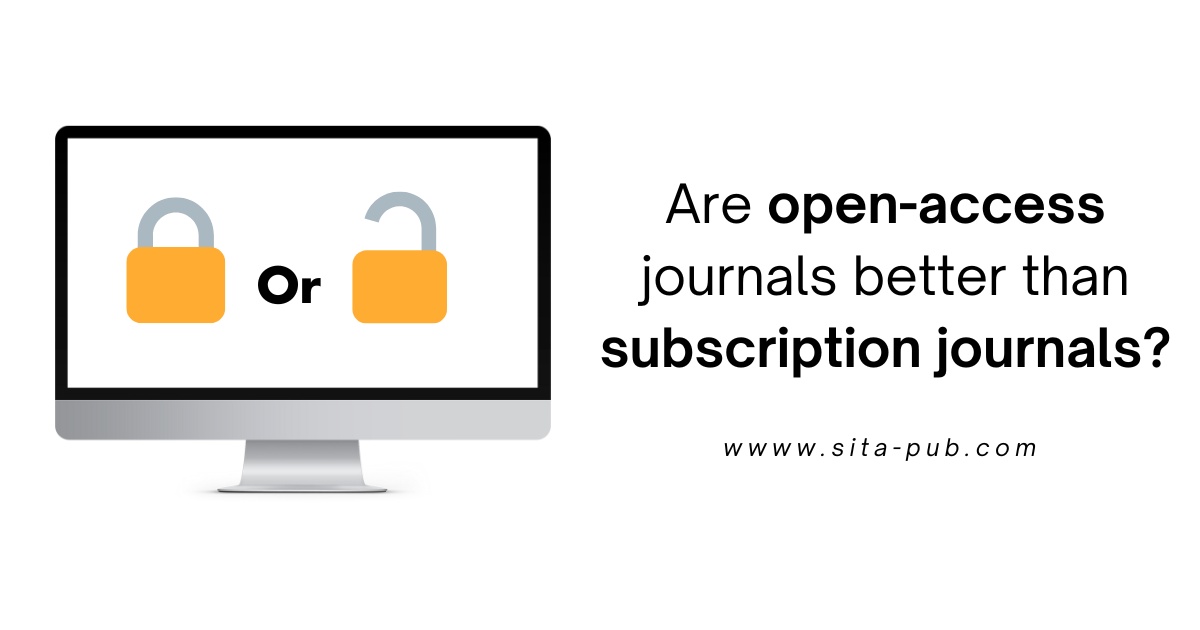
One of the most common questions researchers face before submitting a manuscript is whether to choose an open-access journal or a subscription-based journal. Each publishing model has its own costs, benefits, limitations, and suitability depending on the author’s goals, funding situation, and target audience.
This article provides a clear and practical comparison of open-access journals, subscription journals, and hybrid journals to help researchers make informed publishing decisions.
Understanding Subscription Journals
What Are Subscription Journals?
Subscription journals are traditional academic journals that require readers or institutions to pay for access. These journals are typically funded through library subscriptions, individual subscriptions, or institutional access agreements.
Most long-established journals—especially those with a high impact factor—follow the subscription model.
Are Subscription Journals Free to Publish In?
In many cases, yes. Subscription journals usually do not charge authors an Article Processing Charge (APC) for standard publication. However, optional fees may apply for:
Color figures in print
Additional pages beyond journal limits
Open-access upgrades (in hybrid journals)
Who Pays in Subscription Journals?
Readers or institutions (universities, libraries, research centers)
Authors generally do not pay APCs unless they choose optional services
Benefits of Subscription Journals
Lower Direct Cost for Authors
Since APCs are often not required, subscription journals are attractive for researchers without publication funding.Established Reputation
Many subscription journals are long-standing and highly respected within their disciplines.Strong Editorial Standards
These journals often have rigorous peer-review processes and strict acceptance criteria.Common in SCIE and High-Impact Journals
Many top-tier Web of Science journals still operate primarily under subscription models.
Disadvantages of Subscription Journals
Limited Accessibility
Readers without subscriptions cannot freely access the full text, reducing visibility.Lower Public Reach
Practitioners, policymakers, and researchers in developing regions may not have access.Slower Knowledge Dissemination
Paywalls can slow the spread of research findings.
Suitable For:
Researchers without APC funding
Authors targeting traditional, high-prestige journals
Fields where subscription publishing is still dominant
Academics focused on promotion or institutional evaluation
Understanding Open-Access Journals
What Are Open-Access Journals?
Open-access journals make published articles freely available to anyone immediately after publication. Readers do not need subscriptions or institutional access.
The open-access model aims to promote transparency, knowledge sharing, and global accessibility.
Types of Open-Access Journals
1. Gold Open Access
The final published article is freely available on the journal’s website.
Authors usually pay an Article Processing Charge (APC).
2. Diamond (Platinum) Open Access
Articles are freely accessible.
No APCs for authors.
Funded by institutions, societies, or grants.
3. Green Open Access
Authors publish in a subscription journal but archive a version of the manuscript in a repository.
Often subject to embargo periods.
4. Bronze Open Access
Articles are free to read but without a clear open-access license.
Access can be temporary.
Are Open-Access Journals Free?
For readers, yes.
For authors, not always.
Many open-access journals charge APCs.
Some reputable journals offer fee waivers or reduced charges.
Diamond open-access journals are free for both readers and authors, but are less common.
Who Pays in Open-Access Journals?
Authors, institutions, or research funders
APCs may range from a few hundred to several thousand dollars
Benefits of Open-Access Journals
Maximum Visibility and Reach
Anyone worldwide can read, download, and cite the article.Higher Citation Potential
Open-access articles are often cited more frequently due to accessibility.Compliance with Funding Requirements
Many funding agencies require open-access publication.Faster Knowledge Sharing
Research findings reach practitioners, policymakers, and the public more quickly.Global Equity
Researchers from low-resource regions can access the work freely.
Disadvantages of Open-Access Journals
Publication Costs
APCs can be expensive, especially for early-career researchers.Predatory Journal Risks
Some low-quality journals exploit the open-access model without proper peer review.Quality Variation
While many open-access journals are reputable, not all maintain strong editorial standards.
Suitable For:
Researchers with funding for APCs
Authors seeking broad international visibility
Funded projects requiring open-access compliance
Applied research with public or policy relevance
What Are Hybrid Journals?
Hybrid journals combine subscription and open-access models.
How Hybrid Journals Work
The journal is subscription-based by default.
Authors can choose to make their article open access by paying an APC.
Other articles in the same issue remain behind paywalls.
Benefits of Hybrid Journals
Flexibility for authors
Access to prestigious subscription journals with open-access options
Suitable for funder-mandated open access
Disadvantages of Hybrid Journals
APCs are often higher than fully open-access journals
“Double dipping” concerns (publishers earn from both APCs and subscriptions)
Open Access vs. Subscription Journals: Which Is Better?
There is no universal answer. The better option depends on your goals, funding, and audience.
Factor | Subscription Journals | Open-Access Journals |
Reader access | Restricted | Free |
Author fees | Usually none | Often required |
Visibility | Moderate | High |
Prestige | Often high | Varies |
Funding required | Low | Medium to high |
Citation potential | Moderate | Often higher |
Practical Advice for Researchers
Check journal indexing (Scopus, WoS) rather than focusing only on access model
Avoid predatory journals by verifying peer-review transparency
Consider your funding situation
Align journal choice with career goals, not just speed or cost
Read the journal’s author guidelines carefully
Conclusion
Open-access journals and subscription journals each serve important roles in academic publishing. Open access promotes visibility, accessibility, and global knowledge sharing, while subscription journals continue to offer prestige, selectivity, and cost savings for authors.
Rather than asking which model is better, researchers should ask:
Which publishing model best supports my research goals, funding situation, and academic career stage?
Making an informed choice ensures that your research reaches the right audience while maintaining academic integrity and long-term impact.
How SITA Academy Helps You Choose the Right Journal

Send Your Paper Abstract |

Receive Journal List |

Select Your Journal |

Start the Publication Process |