Secrets of Q1 and Q2 Journals Every Researcher Should Know
Learn the top secrets of Q1 and Q2 journals to improve your publication success. Discover practical tips on journal fit, novelty, language quality, reviewer comments, and strategic publishing for researchers and early-career academics.
- Secret #1: Q1 and Q2 Journals Care More About Fit Than Perfection
- Secret #2: Novelty Matters More Than Sample Size
- Secret #3: Editors Decide Before Reviewers Do
- Secret #4: Q2 Journals Are Strategic, Not “Second Best”
- Secret #5: Language Quality Directly Affects Scientific Judgment
- Secret #6: Following Author Guidelines Is Non-Negotiable
- Secret #7: The Cover Letter Is Not Optional
- Secret #8: Reviewer Comments Are a Second Opportunity, Not a Threat
- Secret #9: Rejection Is Part of Publishing in Top Journals
- Secret #10: Publishing in Q1 and Q2 Journals Is a Long-Term Strategy

Introduction: Why Q1 and Q2 Journals Seem “Unreachable”
For many researchers, Q1 and Q2 journals feel intimidating and difficult to publish in. High rejection rates, long review times, and strict editorial standards often create the impression that publishing in these journals is only possible for senior or well-connected academics. In reality, Q1 and Q2 journals follow clear, predictable rules. What many researchers call “secrets” are simply best practices that experienced authors understand and apply consistently.
This article explains the key secrets of Q1 and Q2 journals in a simple, practical way to help researchers improve their chances of success.
Secret #1: Q1 and Q2 Journals Care More About Fit Than Perfection
One of the most common reasons for desk rejection is poor journal fit, not weak research. Editors want papers that clearly belong in their journal’s scope.
Even high-quality research can be rejected if:
The topic does not match the journal’s focus
The theoretical or methodological approach differs from what the journal usually publishes
A practical tip is to read several recently published articles in the target journal. If your paper looks similar in theme, structure, and methodology, the fit is likely good.
Secret #2: Novelty Matters More Than Sample Size
Many researchers believe that large datasets automatically increase acceptance chances. While sample size is important, novelty and contribution matter more.
Editors and reviewers ask:
What is new in this study?
How does it advance existing knowledge?
Does it address a clear research gap?
A smaller but well-designed study with a strong contribution is often more attractive than a large study with repetitive or obvious findings.
Secret #3: Editors Decide Before Reviewers Do
Before a manuscript reaches peer reviewers, it goes through editorial screening. Editors often decide within a few minutes whether to send a paper for review.
They focus on:
Title and abstract clarity
Relevance to the journal
Overall quality of writing
Apparent originality
A clear, well-written abstract and a focused title can significantly increase the chances of passing this stage.
Secret #4: Q2 Journals Are Strategic, Not “Second Best”
Many researchers view Q2 journals as inferior to Q1 journals. In reality, Q2 journals are often strategic stepping stones.
Q2 journals:
Have strong peer-review standards
Offer higher acceptance rates
Provide good visibility and citations
Publishing in Q2 journals helps researchers build credibility and experience, making future Q1 submissions more successful.
Secret #5: Language Quality Directly Affects Scientific Judgment
Poor English does not just affect readability—it affects how reviewers judge the science itself. Reviewers may assume unclear writing reflects unclear thinking.
Common language issues include:
Long, confusing sentences
Inconsistent terminology
Grammatical errors
Using professional language editing services or native-level proofreading can significantly improve reviewer perception and reduce revision rounds.
Secret #6: Following Author Guidelines Is Non-Negotiable
Q1 and Q2 journals expect strict compliance with their author guidelines. Ignoring them signals lack of professionalism.
Common problems include:
Incorrect reference style
Exceeding word limits
Improper figure formatting
Editors often reject papers before review simply because they do not follow basic technical requirements.
Secret #7: The Cover Letter Is Not Optional
Many authors underestimate the importance of the cover letter. For editors, it provides context and justification for reviewing the paper.
A strong cover letter should:
Briefly explain the study’s contribution
Explain why the journal is suitable
Confirm originality and ethical compliance
A generic or missing cover letter reduces editorial confidence.
Secret #8: Reviewer Comments Are a Second Opportunity, Not a Threat
Receiving major revisions is common in Q1 and Q2 journals and is often a positive sign.
Successful authors:
Respond to every comment point by point
Remain professional and respectful
Explain clearly when they disagree with a suggestion
A well-prepared revision often leads to acceptance in the next round.
Secret #9: Rejection Is Part of Publishing in Top Journals
Even experienced researchers face rejection from Q1 and Q2 journals. Rejection usually reflects fit, timing, or editorial priorities—not failure.
Smart researchers:
Learn from reviewer comments
Improve the manuscript
Submit to another suitable journal
Many published papers were rejected at least once before acceptance.
Secret #10: Publishing in Q1 and Q2 Journals Is a Long-Term Strategy
Publishing in top journals is not about luck or shortcuts. It is about consistency, learning, and improvement.
Successful researchers:
Plan submissions strategically
Build publications gradually
Improve writing and methodology over time
Patience and persistence are essential.
Conclusion: What Successful Q1 and Q2 Authors Do Differently
The real secrets of Q1 and Q2 journals are not hidden. They involve understanding journal expectations, writing clearly, choosing the right journal, and responding professionally to feedback. Researchers who treat publishing as a strategic, long-term process—rather than a one-time attempt—are far more likely to succeed.
By applying these practical insights, publishing in Q1 and Q2 journals becomes achievable, realistic, and repeatable.
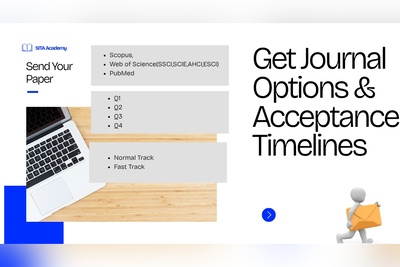
How SITA Academy Helps You Choose the Right Journal

Send Your Paper Abstract |

Receive Journal List |

Select Your Journal |

Start the Publication Process |