Where Can I Find a List of Scopus-Indexed Journals?
Looking for a reliable list of Scopus-indexed journals? Learn how to use official databases like the Scopus Sources List and Scimago Journal Rank, and discover how professional journal recommendation services can help you choose the right journal efficiently.
One of the most common challenges researchers face is identifying reliable and up-to-date lists of journals that are actually indexed in Scopus and relevant to their field. Submitting to the wrong journal can result in immediate rejection, wasted time, or publications that are not recognized by institutions.
This article provides a clear and practical guide to where you can find verified lists of Scopus-indexed journals, how to search within your research field using official databases, and how professional journal recommendation services—such as those offered by SITA Academy—can simplify and accelerate the process.
Why It Is Important to Use Official Journal Lists
Before exploring where to find Scopus-indexed journals, it is essential to understand why accuracy matters. Scopus indexing status can change over time. Journals may be newly added, discontinued, or reclassified. Relying on copied lists, blogs, or unofficial websites can expose researchers to serious risks, including:
Submitting to journals that are no longer indexed
Publishing in journals that do not meet institutional requirements
Delays caused by re-submission after rejection
Damage to academic credibility

For these reasons, researchers should always rely on official sources and verified tools when searching for journals.
Official Sources for Scopus-Indexed Journal Lists
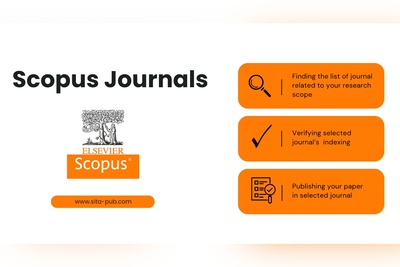
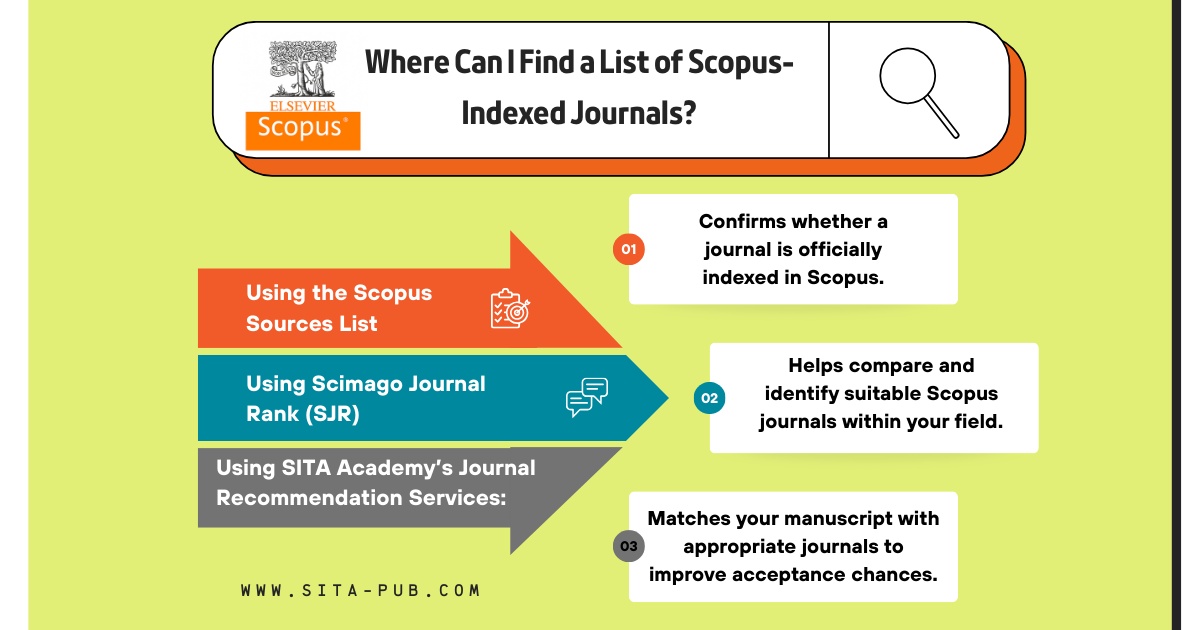
There are two primary, reliable databases that researchers can use to identify and explore Scopus-indexed journals: the Scopus Sources List and Scimago Journal Rank (SJR). Each serves a different but complementary purpose.
1. Using the Scopus Sources List (Step-by-Step Guide)
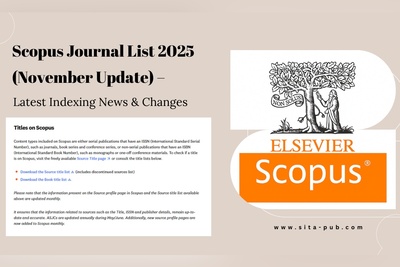
The Scopus Sources List is the most authoritative resource for verifying whether a journal is currently indexed in Scopus. Maintained by Elsevier, it reflects real-time indexing status and coverage information.
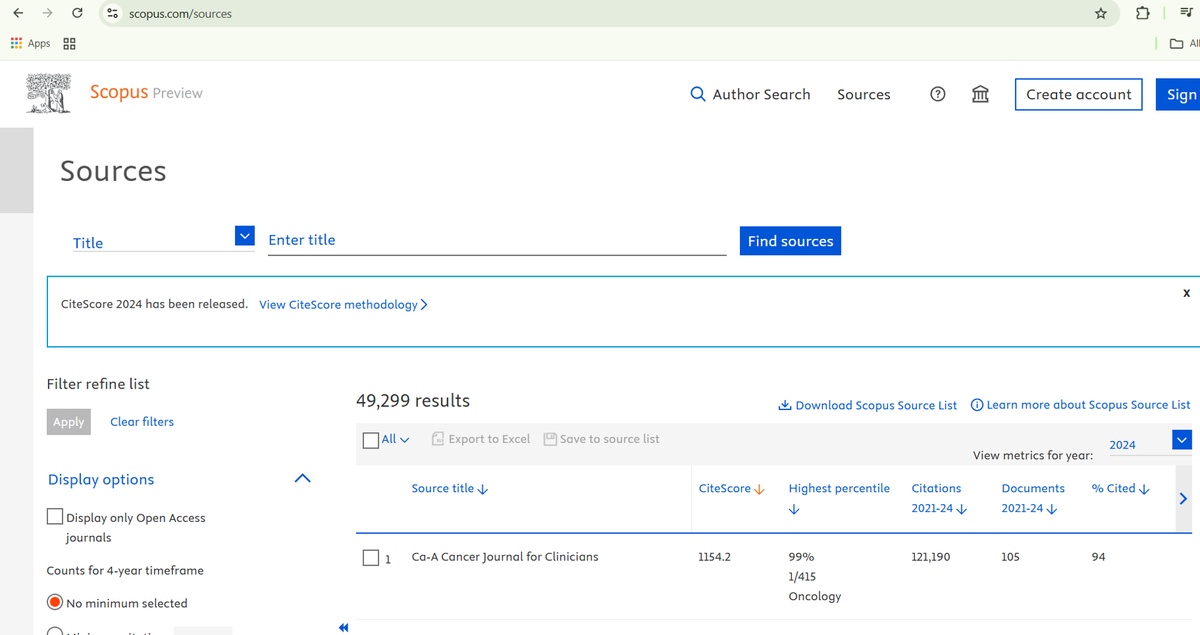
Step-by-Step Guide to Search for Journals Within Your Field
Access the Scopus Sources List
Open the official Scopus Sources page and locate the journal source list.Select “Journals” as the Source Type
Ensure that your search is limited to journals, excluding book series or conference proceedings unless relevant.Filter by Subject Area
Use subject filters to narrow results to your research discipline or specialty area.Confirm Active Coverage
Always check that the journal’s status is marked as active. Journals that have been discontinued should be avoided.Review Journal Information
Examine ISSN details, indexing years, and subject classifications.Visit the Journal’s Official Website
Review aims, scope, and author guidelines to confirm suitability.
The Scopus Sources List is essential for verification, but it does not rank or compare journals. This is where the next tool becomes valuable.
2. Using Scimago Journal Rank (SJR) to Explore Scopus Journals
Scimago Journal Rank (SJR) is a public platform that uses Scopus data to categorize and rank journals within specific subject areas. While it does not replace the Scopus Sources List, it is highly effective for journal discovery and comparison.
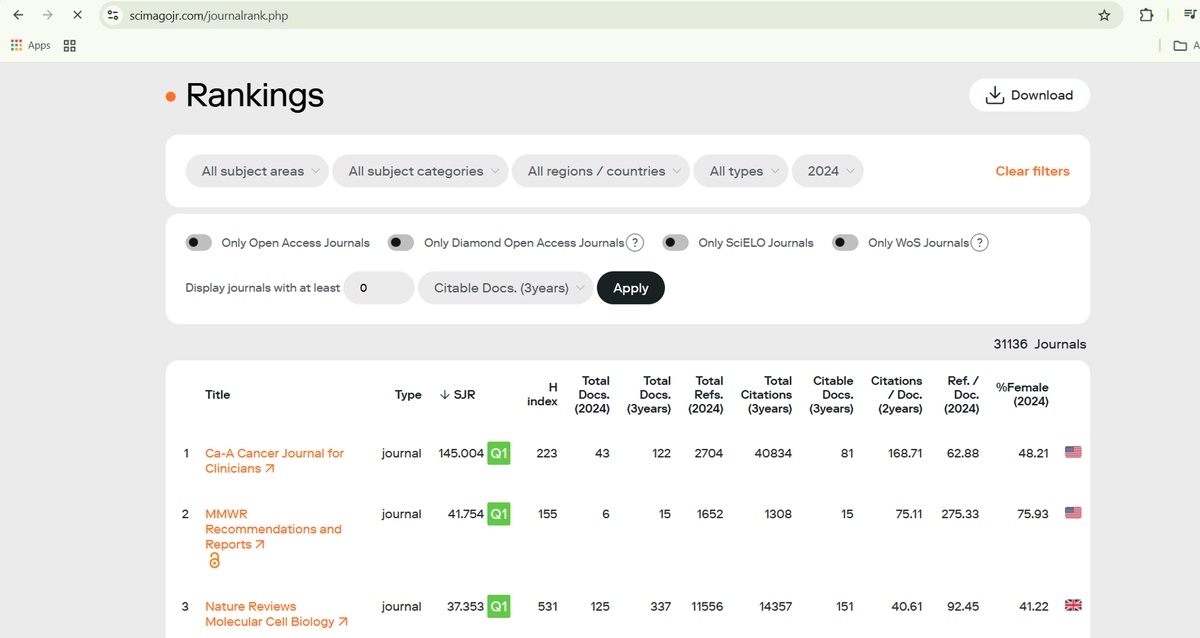
Step-by-Step Guide to Search for Journals Within Your Field
Access the Scimago Journal Rank Website
Open the Scimago portal and navigate to the journal rankings section.Choose Your Subject Area and Category
Select the subject area that best matches your research, then refine it to a specific category.Review Journal Rankings
Journals are grouped relative to others in the same field, helping you understand competitiveness.Filter by Region or Country (Optional)
This is useful if your research has regional relevance or policy focus.Analyze Journal Profiles
Click on individual journals to review scope, publishing trends, and stability over time.Examine Recently Published Articles
Confirm that your research topic, methods, and article type align with what the journal publishes.
Scimago is especially useful for shortlisting realistic target journals, but final indexing verification should always be done through Scopus.
Limitations of Manual Journal Searching
While Scopus and Scimago are powerful tools, manual searching has limitations:
It is time-consuming
It requires publishing experience to interpret results correctly
It does not assess acceptance probability
It does not evaluate manuscript readiness
It does not account for language or technical issues
For researchers under deadlines or unfamiliar with journal selection strategies, manual searching can lead to repeated rejections.
3. Using SITA Academy’s Journal Recommendation Services
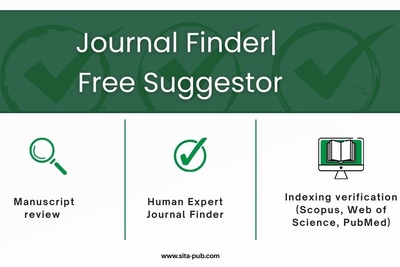
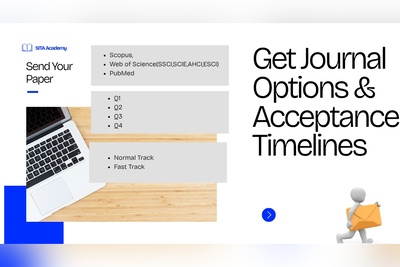
To overcome these challenges, many researchers choose to use professional journal recommendation services. SITA Academy provides structured, manuscript-driven journal selection support designed to improve publication success.
How Journal Recommendation Services Improve Publication Success
SITA Academy’s approach begins with a manuscript-based evaluation, rather than a generic database search. Experts assess your paper’s topic, methodology, contribution, and technical quality before recommending journals.
Key benefits include:
Accurate Journal Matching
Journals are selected based on real compatibility with your manuscript.
Higher Acceptance Probability
Recommendations focus on journals where your research realistically fits editorial expectations.
Time Savings
Researchers avoid trial-and-error submissions and unnecessary rejections.
Technical Readiness Support
Language quality, structure, formatting, and similarity issues are addressed in advance.
Strategic Submission Planning
Guidance is provided on how and where to submit to maximize success.
This integrated approach allows researchers to move efficiently from manuscript completion to successful submission.
When Should You Use Journal Recommendation Services?
Professional support is especially valuable if:
You have finished writing your paper and want to publish quickly
You are unsure which journals are suitable for your research
Your manuscript is extracted from a thesis
English is not your first language
You have faced previous rejections
You must meet graduation or promotion deadlines
In these cases, expert guidance can significantly reduce risk and uncertainty.
Conclusion
Finding a reliable list of Scopus-indexed journals is a critical step in the academic publishing process. The Scopus Sources List provides official verification, while Scimago Journal Rank helps researchers explore and compare journals within their field. Used together, these tools form a strong foundation for journal selection.
However, database searching alone does not guarantee success. Strategic journal matching, manuscript readiness, and technical compliance are equally important. For researchers seeking efficiency, higher acceptance rates, and professional guidance, SITA Academy’s journal recommendation services offer a practical and reliable solution.
Choosing the right journal is not just about indexing—it is about making informed, strategic decisions that support successful academic publication.
Verified Contact Channels
If you have any questions, inquiries, or would like to learn more about our services, please don't hesitate to reach out to us. Our dedicated team is ready to assist you.